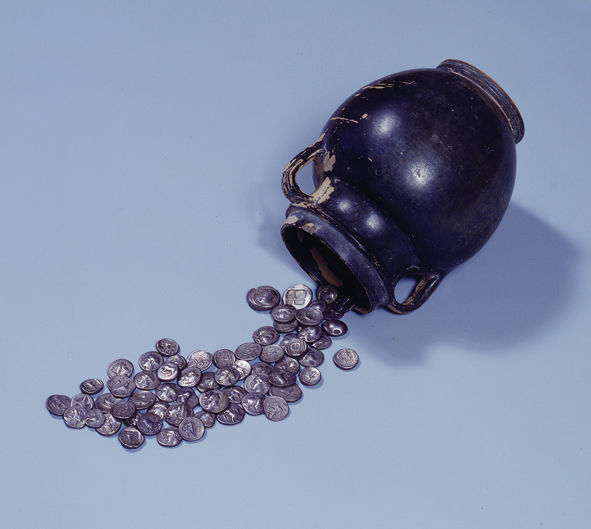
The United Nations (UN) have designated specific days of the year for commemorating or promoting certain events or topics. The objective is to increase awareness and motivate the international community towards certain issues. These days are proposed by one or more Member States, as well as by specialised agencies (UNESCO, UNICEF, FAO, etc) and are established with a resolution by the UN General Assembly.
In this series of posts, the Numismatic Museum presents coins, medals and other specimens from its Collections that are relevant to the UN International or World Days.
Useful links: https://www.un.org/en/observances/international-days-and-weeks
07/04 – WORLD HEALTH DAY
This first post is made on the occasion of the World Health Day, which was established in 1950 and marks the anniversary of the founding of the World Health Organisation (WHO) οn April 7, 1948.
The recent experience of the COVID-19 pandemic has once again highlighted the crucial issue of world health and has put forth the need for international collaboration in order to face health crises.
Useful links: https://www.who.int/campaigns/world-health-day
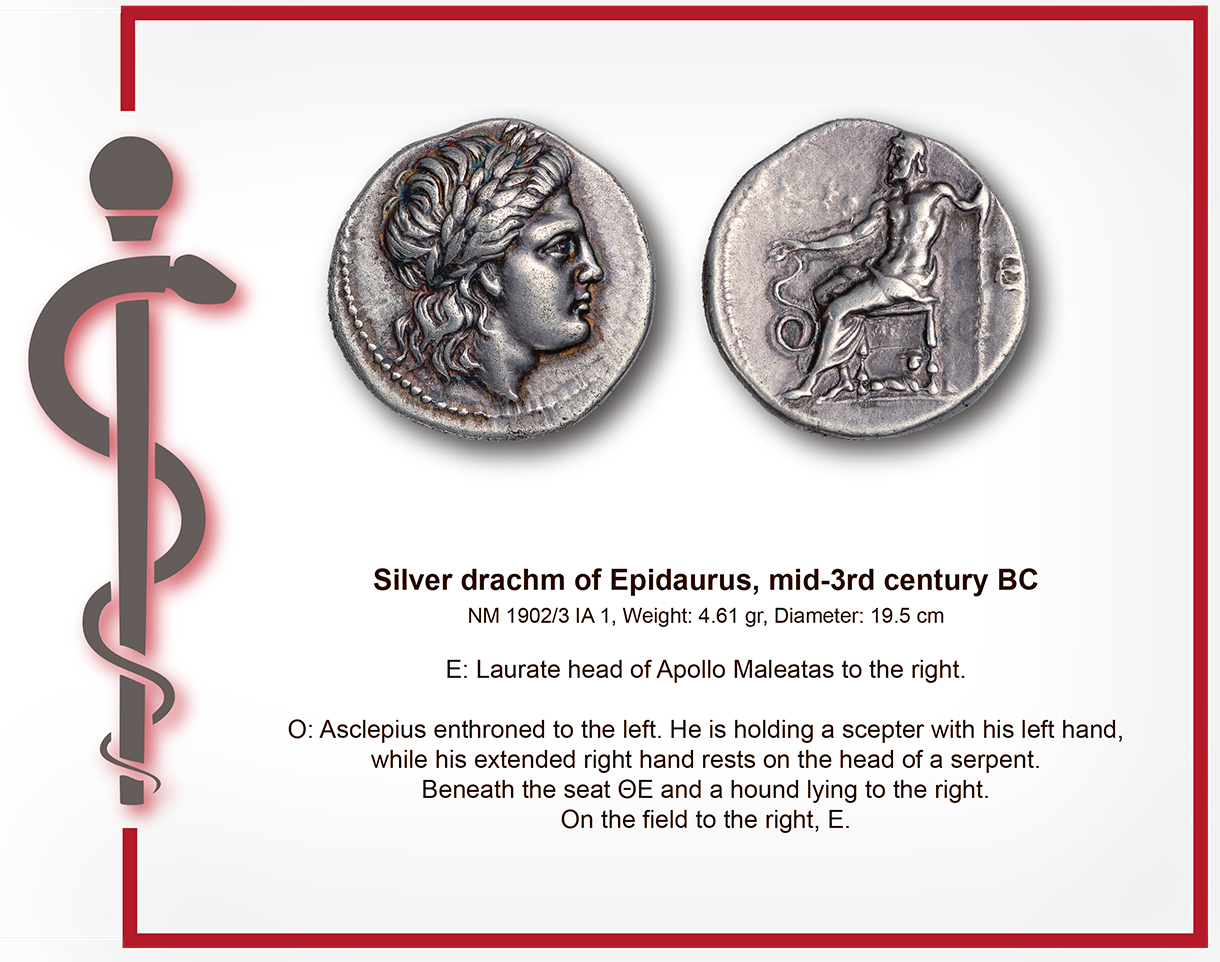
Here we present a silver drachma from Epidaurus, which was struck during the mid-3rd century BC and is kept in a display case at the Museum’s first floor. Its obverse depicts the ivory and gold statue of Asclepius, god of health and medicine, which was made by Thrasymedes and was situated at the sanctuary of ancient Epidaurus. The depiction of the statue closely follows Pausanias’ (II, 17.2) account:
The image of Asclepius is, in size, half as big as the Olympian Zeus at Athens, and is made of ivory and gold. An inscription tells us that the artist was Thrasymedes, a Parian, son of Arignotus. The god is sitting on a seat grasping a staff; the other hand he is holding above the head of the serpent; there is also a figure of a dog lying by his side.… (trans. W.H.S. Jones and H.A. Ormerod).