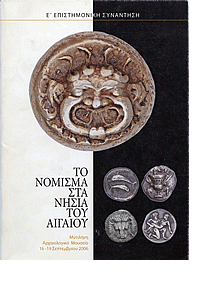
The ALPHA BANK Numismatic Collection
A “treasure” of cultural heritage

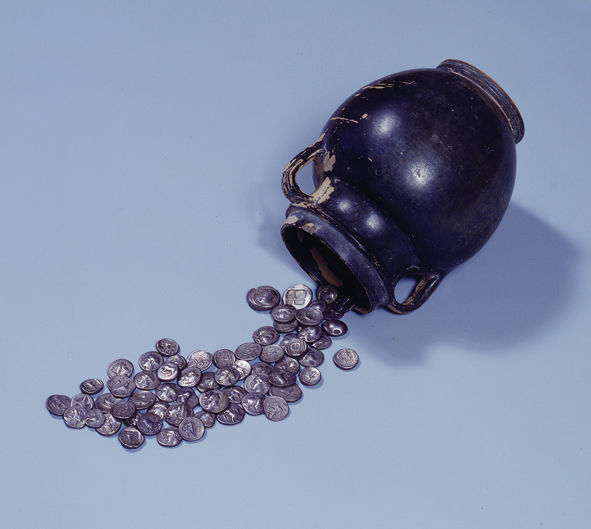
In the context of the promotion of coinage as a carrier of Greek civilization, the Alpha Bank Numismatic Collection features coins issued by peoples, cities and rulers who were on the fringes of the ancient world:
- Celtic coins from western and central Europe, imitating primarily the coins of King Philip II and Alexander the Great of Macedonia
- coins of the Greek colonies founded in modern-day France (Marseilles), Spain (Emporion) and Romania (Callatis)
- coins issued by cities in North Africa, namely Carthage (Tunisia) and Cyrene (modern-day Libya)
- a rich series of coins of the Ptolemaic Empire of Egypt
- coins from Bactria (modern-day Afghanistan) and India, the easternmost point reached by the army of Alexander the Great.
Finally, with the parallel objective of reconstructing the numismatic history of Greece, the Alpha Bank Numismatic Collection also includes coins of the Roman and Byzantine eras, coins of the Ottoman period, the phoenix of Kapodistrias –the first coin to be issued by the newly-founded Greek State–, and King Otto’s drachma, the monetary unit that was kept in circulation until 2002, when the national currency was changed to the euro.
Since the 1960s, the Numismatic Museum of Athens, the only one of its kind in Greece, had a key role in the establishment of Alpha Bank’s Numismatic Collection as a “treasure” of our cultural heritage, thanks to the good relationship between Yannis Costopoulos —himself a connoisseur and collector of ancient coins and an ardent advocate of the repatriation of Greece’s cultural heritage— and Manto Economidou, the emblematic numismatist and Director of the Museum for 30 years. Passed on to all her successors, this relationship led to a productive and multifaceted collaboration that continues to this day, with the presentation of the exhibition “ΕγχρήματηΙστορία”.
For more information:
The Alpha Bank Numismatic Collection – alphapolitismos.gr